• Home
  • Blog Posts
    • Mental Health
    • Relationships
    • Spirituality
  • Short Stories
  • About
  • Contact

Poets Prose

Expand your awareness

  • Mental Health
  • Relationships
  • Spirituality

March 22, 2023

What is Selective Mutism? And Why is It So Unheard Of?

Chances are unless you know someone with selective mutism, you’ve probably never heard of it. Or if you have, you know little to nothing about it. So, what is selective mutism? And why is it so unheard of?Selective Mutism
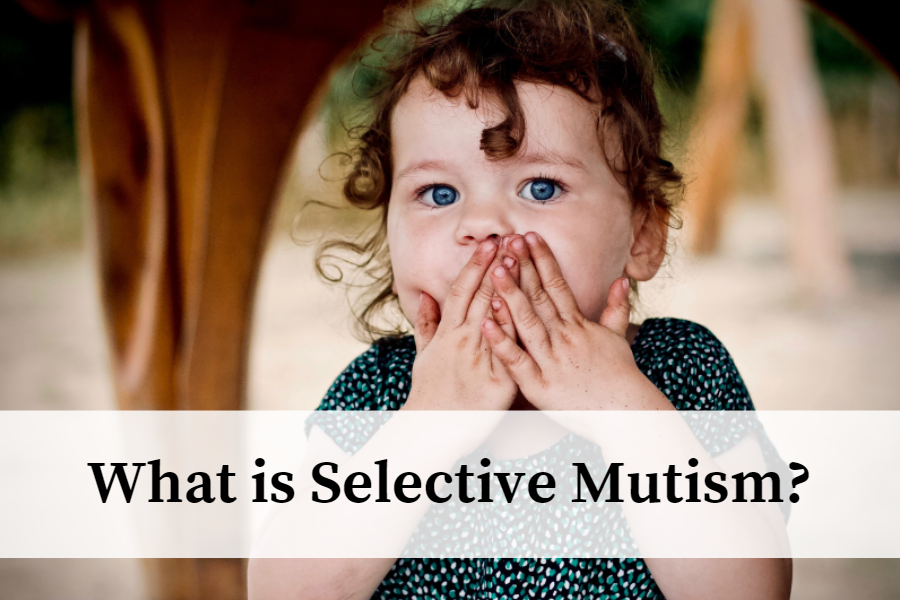
Selective mutism is largely unheard of, so why is that? What is the disorder and why is it so uncommon?

Growing up with selective mutism I always knew there was something different about me, but I didn’t understand what. The lack of knowledge and education around selective mutism made my life so much harder, so spreading awareness about SM is something that’s hugely important to me.

In this post, I will cover those questions as well as the signs and symptoms, types of treatment, causes, whether or not there’s a correlation with autism, and how to get a child with selective mutism to speak. So, if you haven’t heard of selective mutism this post will tell you exactly what you need to know!

This post is all about what is selective mutism!


What is Selective Mutism?

Selective mutism (SM)  is an anxiety disorder that causes someone to be unable to speak in certain situations, such as in school or even around extended family while being able to speak perfectly fine in other situations such as at home or around close friends. While SM is considered a childhood disorder, it can also carry on into adulthood if left untreated.

SM is considered by some to be an extreme fear or phobia of speaking or of situations where one may be expected to speak.

It’s important to note that not speaking is never a choice for someone with selective mutism, it’s an entirely involuntary response their brain produces to stress.


Related Post: How to Help a Child With Selective Mutism


What are the Signs?

Selective mutism can start at any age but begins most often between the ages of two and four. It’s often first noticed when a child begins to interact more with people outside of their family, such as at the start of school. The child will exhibit an inability to speak with many of their peers and teachers.


Forms of Communication

Some children with SM will use non-verbal language, such as nodding, pointing, or facial expressions to communicate. People with SM can sometimes be thought of as “professional mimes”, using whatever means they can to get their point across nonverbally. While others can’t use any form of communication while in their frozen state, including writing. Some children with SM may be able to respond verbally in a few words or a whisper but are still limited in their communication.


Body Language

Someone with SM may display frozen or paralyzed body language when met with interaction with someone outside their comfort zone. They may appear stiff and uncomfortable, avoid eye contact, or display anxious behaviours such as playing with their hair or tugging at sleeves.

It’s common for it to seem that a child with SM doesn’t smile, they often carry a very blank expression. The freeze state of SM often brings with it somewhat of a flat affect making it seem as if the child is unhappy or disinterested. This doesn’t necessarily actually reflect the child’s state of mind at that moment. The same child may be completely smiley and carefree while at home.


Sensory Issues

Some children with SM also have sensory processing disorder (DSI). Meaning they are oversensitive to stimuli such as light, sound, touch, taste, and smell. They may get overstimulated by bright lights, loud noises, or busy stressful environments, which can lead to frustration and anxiety. They may shut down or withdraw from situations that trigger their DSI, or it may lead to them acting out and displaying negative behaviours.


Fear of Making Mistakes

Many people with SM are afraid to do anything that may draw attention to themselves. They can be afraid to do anything outside their normal routine in case it provokes questions or comments. Children may refrain from even asking to use the washroom in class which could lead to accidents. They may also struggle in class because they’re unable to raise their hand or ask questions.

People with SM often have a fear of making mistakes, they’re afraid of doing or saying the wrong thing and being judged for it. Ironically, we likely end up more judged for not speaking than we would for anything else we could do or say, but our anxiety doesn’t let us think that way.


What Causes SM?

The exact cause of selective mutism is unknown, but it’s attributed to a predisposition for anxiety and genetic factors. People with SM can display a tendency to withdraw from new or unfamiliar situations and often have at least one other anxiety disorder such as social anxiety.


Related Post: What Causes Selective Mutism? Misconceptions & More!


Why is it So Uncommon?

SM is extremely rare, less than 1% of the population has the disorder. Therefore, it’s widely unknown by the general public and studies on the disorder are scarce. Textbook definitions are also limited and can even be misleading. There was a portion about SM in my Psych 101 textbook that incorrectly described the disorder as a developmental delay (*eye roll*). While developmental delays can be comorbid with SM, SM is not itself a developmental delay.

This lack of knowledge can be incredibly frustrating for someone with SM, as they often feel misunderstood by those around them. People often mis-assume the disorder for something else, such as autism, shyness, or even just general defiance. There’s not a lot of public knowledge of the disorder and it’s not something you hear about or see represented very often.

The only public representation of the disorder I know of is Raj from The Big Bang Theory and even then most people probably aren’t aware of it. The disorder is only mentioned by name once in the episode “The Cornhusker Vortex”. It’s unfortunate to have what could be widely known representation be somewhat swept under the rug in the show.


Selective Mutism and Autism. What is the Correlation? Is there One? 

The short answer is, no there isn’t. The two disorders are entirely separate. While the disorders may share some overlapping symptoms, those symptoms are generally only present in someone with SM while in their freeze state, whereas someone with autism would display those symptoms all the time. Though, the two disorders are comorbid, meaning it’s not uncommon for them to occur together.

Some other comorbid disorders include separation anxiety, generalized anxiety disorder, OCD, depression, premorbid speech and language abnormalities, developmental delay, and Asperger’s disorders.


Related Post: Selective Mutism and Autism: Is There a Link?


How Do You Get a Child with SM to Speak?

You don’t pressure them. This is so important, I cannot stress this enough. Do not force a child with selective mutism to speak, this only reinforces their anxiety around speaking and makes it harder for them to do so in the future. For a child with SM to speak they need to feel comfortable enough to do so. This means you need to feel like a safe person. A safe person does not pressure or make them feel obligated to speak. Demanding speech is a surefire way to ensure someone with SM never speaks to you.

If someone with SM doesn’t feel comfortable talking to you, spend time with them doing an activity that doesn’t require speech or talk to them without expectation of a response. This will let someone with SM know that they can feel safe with you, then they may begin to talk, little by little, and eventually, they may feel fully comfortable being themselves around you. You may hardly even recognize the quiet person they were before


How Do You Treat SM?

Treatment for SM is not just about getting the child to speak, it’s about reducing the anxiety around speaking. This begins in the home and at school. It’s important to remove all pressure on the child to speak so that they feel safe in their environment. Then they may begin to feel comfortable saying one or two words or maybe speaking to one person. The goal is to eventually get them comfortable enough to speak to all people in all environments. The need for further treatment can be prevented by early intervention and by creating these safe spaces for your child. This means informing your child’s teachers about the disorder and getting them to follow suit in the classroom.

It’s important to note you shouldn’t get too excited when the child does speak, respond in a warm kind manner as you would with any child, but don’t make a big deal out of it!


Further methods of treatment include:

  • Cognitive Behavioral Therapy (CBT)
  • Behavioral Therapy
  • Graded Exposure
  • Stimulus Fading
  • Shaping
  • Positive and Negative Reinforcement
  • Desensitization
  • Medication

The most common method of treatment is Behavioral Therapy. This involves gradual exposure to increasingly difficult tasks. Over time the child learns the anxiety they feel about speaking has decreased. They can then accomplish these tasks without avoidance.

Medication is generally only used in older kids and teenagers whose anxiety is especially debilitating or has led to depression. It is best used alongside other forms of treatment.


As you can see selective mutism is so much more than just not speaking. Hopefully, now you have a much better understanding of the disorder and why knowledge of it is so scarce.


Post by Morgan Peters


Other Posts You May Like:

How to Help a Child With Selective Mutism
What Causes Selective Mutism? Misconceptions & More!
Selective Mutism and Autism: Is There a Link?


Sources:

“Selective Mutism.” NHS Choices, NHS, 17 Feb. 2023, https://www.nhs.uk/mental-health/conditions/selective-mutism/#:~:text=Selective%20mutism%20is%20an%20anxiety,untreated%2C%20can%20persist%20into%20adulthood.

“Selective Mutism.” Anxiety Canada, 4 Nov. 2022, https://www.anxietycanada.com/disorders/selective-mutism/.

Shipon-Blum, Eliza. “What Is Selective Mutism.” Selective Mutism Anxiety & Related Disorders Treatment Center | SMart Center, 19 Apr. 2023, https://selectivemutismcenter.org/whatisselectivemutism/.

“What Is SM?” Selective Mutism Association, 14 Sept. 2021, https://www.selectivemutism.org/what-is-sm/.

Delano, Claire. “Selective Mutism and Autism: Is My Child Mute or Autistic?” Autism Parenting Magazine, 22 Oct. 2021, https://www.autismparentingmagazine.com/selective-mutism-autistic/.


Posted In: Anxiety, Mental Health, Selective Mutism

About Me

About Me
Morgan is a writer and poet. In 2020 she began posting her original poems to Instagram featuring long captions delving deeper into her pieces. Poet's Prose acts as an extension to these insightful write-ups, bulding upon themes of relationships, mental health, and spirituality.

Get Social

Featured Posts

law of detachment definition

The Law of Detachment Definition

Polyamory vs Polygamy vs Polyandry

Polyamory vs Polygamy vs Polyandry: What’s the Difference?

what causes selective mutism

What Causes Selective Mutism? Misconceptions & More!

Browse the Blog

  • Home
  • Blog Posts
  • Short Stories
  • About
  • Contact
  • Privacy Policy
  • Disclosure
  • Terms & Conditions
  • Cookie Policy

Search

Connect

m.peterspoet

The rapture. . . All this rapture talk got me thin The rapture.
.
.
All this rapture talk got me thinking of how this event would actually go. Certainly many who claim to be Christian would be left behind and many who don’t would ascend. I can only imagine the outrage this would cause for those who remained. Some would seep into their anger maybe they would begin to hate God. Others, would reflect and realize that maybe they had it all wrong. Maybe some would change for the better. Maybe some wouldn’t change at all.
My soft defence. . . As women, we’re so often taug My soft defence.
.
.
As women, we’re so often taught to suppress our instincts. We’re raised to be polite and accommodating. To always give the benefit of the doubt. We’re told we’re overreacting when we feel unsafe, but we’re also blamed when something happens to us. 

Being a woman is like being constantly gaslighted by society. Everything we do is somehow wrong. “You were rude and distrustful, how dare you?”, “You trusted that man? What’s wrong with you?”, “You wore that? What did you expect?” 

We’re told it’s not all men, and of course it’s not. But it’s more than enough when we’ve all had these experiences. You treat every gun as though it’s loaded until proven otherwise.
There’s been some discussion online recently about There’s been some discussion online recently about coffee dates. Are they low-effort or the perfect first date?

Personally, I love them. They’re a great way to meet someone new without spending a ton of money or investing hours of your time. I don’t believe a coffee or dinner date is a reflection of anyone’s worth, it’s simply a preference.

Substack link is in my bio!
The calm in the storm. . . I recently attempted to The calm in the storm.
.
.
I recently attempted to use dating apps again and very quickly regretted it. I can only be asked, “How was your day?” so many times before I simply lose my mind.

Probably my bad, for searching for depth
in a place where only shallowness thrives.
Sometimes, love doesn’t need certainty. . . I’m no Sometimes, love doesn’t need certainty.
.
.
I’m not gonna lie, I kinda hate the term “casual” when it comes to relationships, but maybe that’s just because I’m incapable of it. Any non-committed relationship I’ve ever been in has still been deeply meaningful to me. I couldn’t be in a connection with someone I don’t at least share a strong friendship with.

However, sometimes, feelings go deeper than that, but for whatever reason, you don’t want to be “in a relationship” with this person. Society essentially deems these connections as “casual” and less important than committed relationships. But are your friendships less important than your romantic relationships? They shouldn’t be. So, why should these connections? 

Just because you’re not introducing someone to your parents or planning a lifetime together doesn’t make that connection less meaningful. Relationships are as meaningful as you decide for them to be.
Blocking isn’t rude, it doesn’t require the worst- Blocking isn’t rude, it doesn’t require the worst-case scenario. You can block anyone for any reason at all. It doesn’t require justification.

Go to the link in my bio to read this Substack story about a university whose email and number I recently blocked.
It’s a masochistic sense of comfort. It’s a masochistic sense of comfort.
Boundaries in a relationship should never be assum Boundaries in a relationship should never be assumed. Having been polyamorous, I’m all too aware that un-communicated boundaries are impossible to uphold. And just because you think a boundary should be obvious, doesn’t mean your partner does.

So, before you think, “This should be obvious,” and avoid discussing a boundary, communicate it instead. Otherwise, you may find out the hard way that your partner isn’t on the same page.

Link to Substack is in my bio
Go find what you need. . . I recently dated someon Go find what you need.
.
.
I recently dated someone who told me he loved everything about me, but that he felt my selective mutism was something he had to tolerate. 

I was taken aback by it because he wasn’t all that talkative himself, and I never felt we had an issue. We always had things to say, but I was also comfortable with the moments when we had silence. I don’t feel the need to fill every space with sound. 

I felt that if he truly loved everything about me, he would love that part of me, because it certainly wasn’t going anywhere. Silence is just as much a part of me as all my other attributes. You can’t love my empathy and altruism without understanding what made me that way. 

I wouldn’t be the person I am without my selective mutism and someone resenting that part of me simply isn’t going to be healthy for me.
I’m better left as a manic pixie dream. . . If a m I’m better left as a manic pixie dream.
.
.
If a man prefers you have no needs, he certainly doesn’t love you. He only loves what can provide.
I’ve mastered the rules of the game. . . Can you t I’ve mastered the rules of the game.
.
.
Can you tell how apathetic I’ve become about dating? At this point, it truly does feel like a game of who can care less. Who can play their cards just right so they don’t end up with a broken heart.

I’ve mastered the art of self-protection and I hate how often I’ve had to use it. Relationships shouldn’t feel like war, but all I’ve learned is how to defend myself.
How to break my heart. . . I wrote this years ago How to break my heart.
.
.
I wrote this years ago and it’s just been sitting in my notes app collecting dust. The final stanza kept floating around in my head as some momentous truth. 

That’s often how my relationships end, with my unending forgiveness but the ultimate lack of all-enduring love. I think back then, I wanted love to be unconditional; I wanted to love no matter what. But I’ve learned that love does require conditions. You have to treat me a certain way for my love to remain intact—and that doesn’t make the love less—it just means I have self-respect. 

Love is not meant to exist no matter what. Love is contingent on how you’re treated. It’s a mutual exchange. You give love and you get love. If you’re not being treated lovingly, it’s only fair that your love would die.
Judgment is a Christian’s greatest sin. . . I grew Judgment is a Christian’s greatest sin.
.
.
I grew up in the church and the biggest hypocrisy I noticed among Christians was their judgement. Christians are called not to judge, for only God is righteous. Everyone sins, so who the hell are we to judge anyone? However, Christians have an affinity for judgment. They believe because they’re Christian they’re better than everyone else. It’s often an unconscious belief, no Christian would ever admit to this line of thinking.

I deconstructed my Christianity when I was about 19 and quickly realized how ingrained these beliefs had been. I soon noticed how much more accepting I had become since dropping the “Christian” label. I wasn’t better than anyone. None of us were. In that sense, I’ve become much more “Christlike”.

The main reason I stepped away from religion was the dogma. There were far too many things Christians were expected to believe that I couldn’t justify. There was too much hate and judgment within the church. I wanted to praise God without being told who or what to hate. I wanted to love without being shamed.

God is love, and anything used to justify hate in His name is purely the thought of man. If you hold hatred in your heart it’s because that’s who you are, it certainly didn’t come from Him.
The one that got away. The one that got away.
The love I deserve exists because I exist. . . I’m The love I deserve exists because I exist.
.
.
I’m tired of hearing men say that women are asking for too much. All I ask is for what I know I can provide; I only desire to be loved the way I love. Why on earth would I settle for less?
Love is a lost art. Love is a lost art.
I recently had someone invite me to “read together I recently had someone invite me to “read together” on a first date and, personally, I thought it was off-putting. A first date should be for getting to know each other.

But I was curious about other people’s opinions, so I asked around and responses were varied… and sometimes shaming. Some people did *not* like that I didn’t go on this date.

So, I thought we should talk about the idea of shaming women for saying no, and how common this has become.

Link to Substack in my bio!
A heart can only bleed for so long. A heart can only bleed for so long.
You deserve a love that loves all of you. You deserve a love that loves all of you.
Life is more than conception. . . In my opinion, a Life is more than conception.
.
.
In my opinion, anyone who understands the facts should, without a doubt, be pro-choice. You can’t say you care about life and allow so much suffering to take place. 

Life is so much more than conception. You can’t say you care about life, when that life is confined to embryos, and ignores the lived reality of mothers and children everywhere.

Copyright © 2026 Poets Prose · Theme by 17th Avenue